IIश्री:II
An Interactive Āyurveda Book

The Pañcha Mahabhutas are the basic elements that make up everything around us. At the smallest level, everything is made of atoms, which are tiny particles consisting of protons, neutrons, and electrons. When many atoms join together, they form molecules. These molecules are the basic level of organization in the human body.

Tap any colored word or button to explore it

Physiology Āyurveda Anatomy
Chapter One

The Body’s Levels of Organization

scroll to begin ↓
1

Chemical

This stage encompasses atoms and molecules, the tiny particles that are the fundamental components of all living organisms. A collection of atoms and molecules organizes to form a cell.

2

Cellular

A cell is composed of atoms and molecules and serves as the fundamental unit of life. Many cells join to form a tissue.

3

Tissue

A tissue consists of a collection of similar cells that collaborate to perform one or more specialized functions. Many tissues join to form an organ.

4

Organ

An organ is a distinct, structured assembly of tissues that function together to perform specific roles within the body. A collection of organs join to form a system.
System
5

System

A system is a collection of interconnected and interdependent organs that collaborate to achieve a particular function or set of functions. A collection of all bodily systems make up the human organism.
The Human Organism
6

The Human Organism

The human organism, the highest level of complexity, is an integrated structure comprising cells, tissues, organs, and systems. Each level is functionally interconnected and crucial for health, as any change in one part affects multiple processes or structures.

Tridosha

The Āyurvedic Architecture

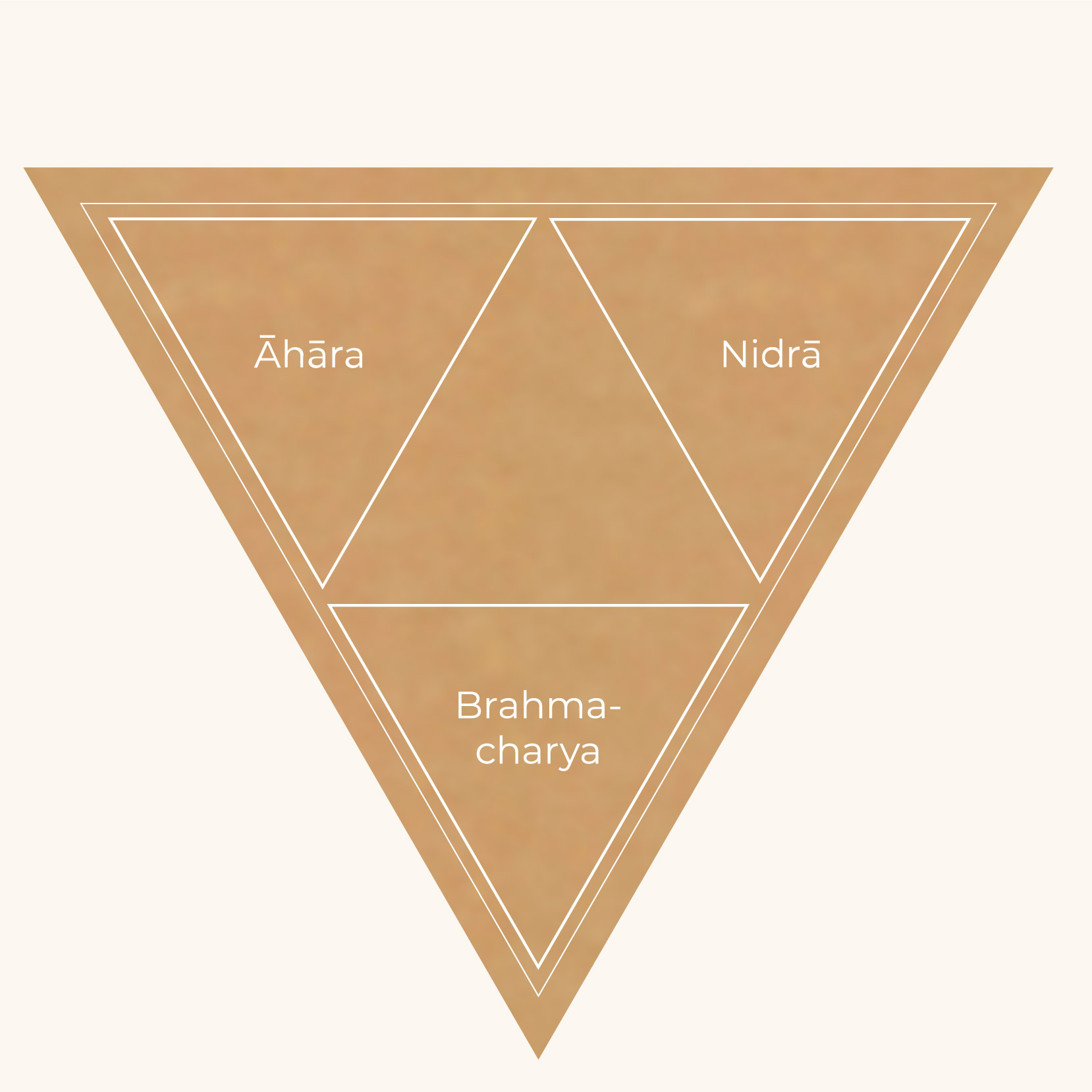
In Āyurvedic philosophy, the concepts of Trayopastambha, Tridanda, and Purushārtha constitute an integrated framework that links daily lifestyle choices with human existence and the overarching purpose of life.

Trayopastambha

Trayopastambha

The three pillars of daily life: Āhāra, wholesome, tailored nutrition; Nidrā, restorative sleep for tissue repair and mental renewal; and Brahmacharya, conservation of vital and sexual energy for stamina and resilience. These pillars sustain the Tridanda, the three foundations of the living being.

Tridanda

Tridanda

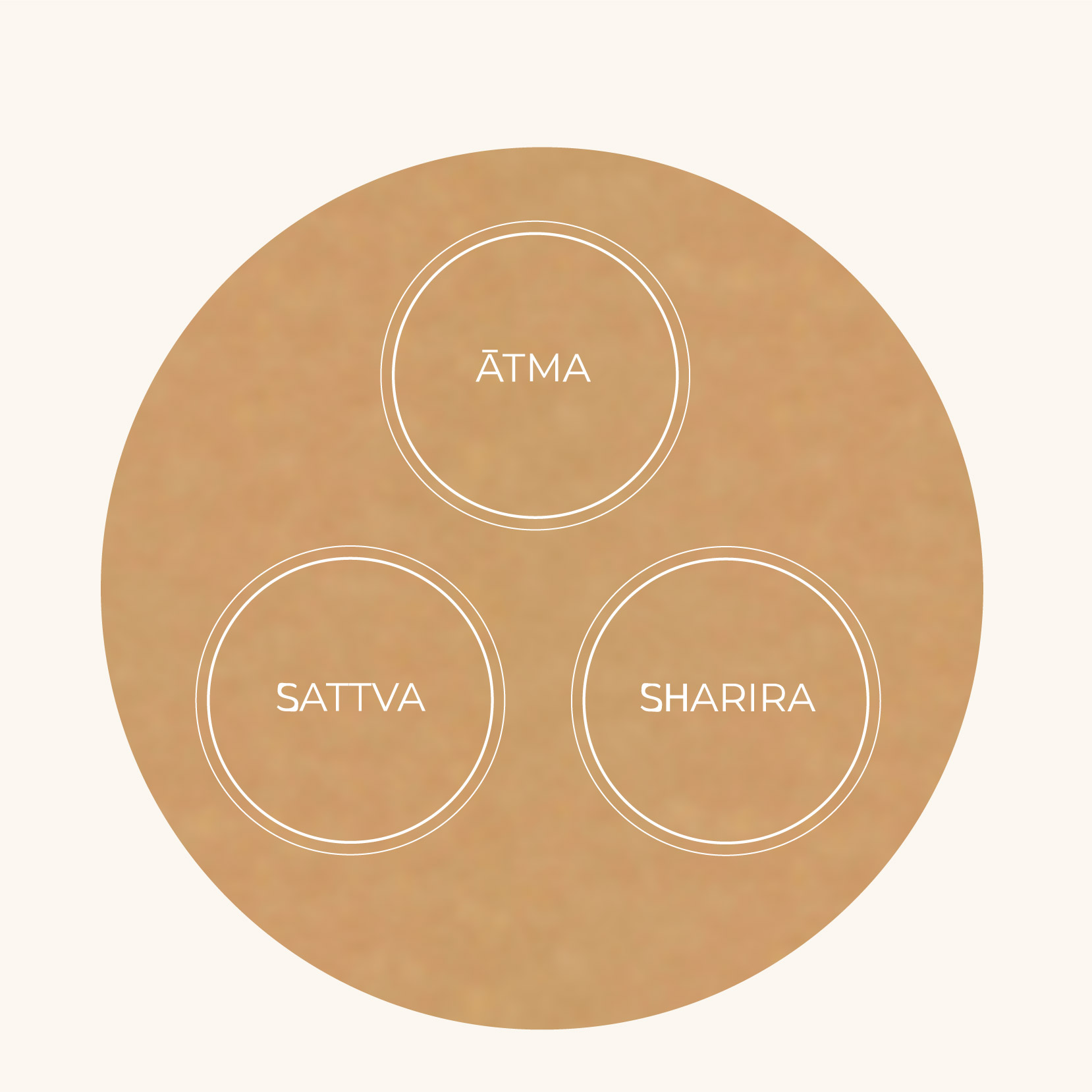
The three foundations of life: Sharira, the physical body of elements; Sattva, the mind, clarity, emotion, perception; and Ātma, the immortal soul that animates both. When the pillars stabilize the foundations, one gains the strength and clarity to pursue the Purushārtha, life's four goals.

Purushārtha

Purushārtha

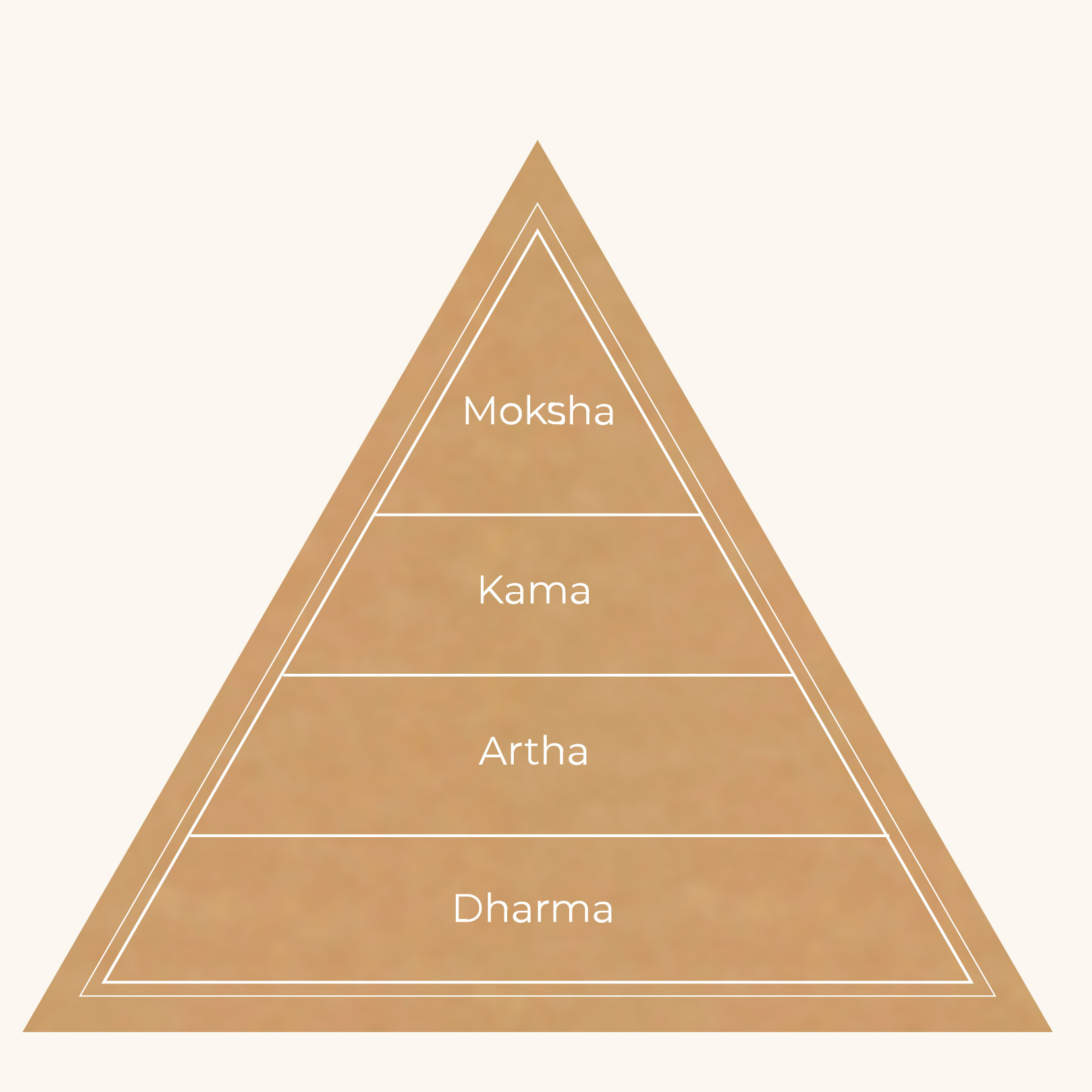
The four aims of life: Dharma, ethical duty and righteousness, which frames Artha, wealth and material security, within which one enjoys Kama, sensory pleasure, love, beauty, ultimately leading to Moksha, the spiritual liberation.

The Living Body

Chapter Two

Shadrasa &
Avastha Pāka

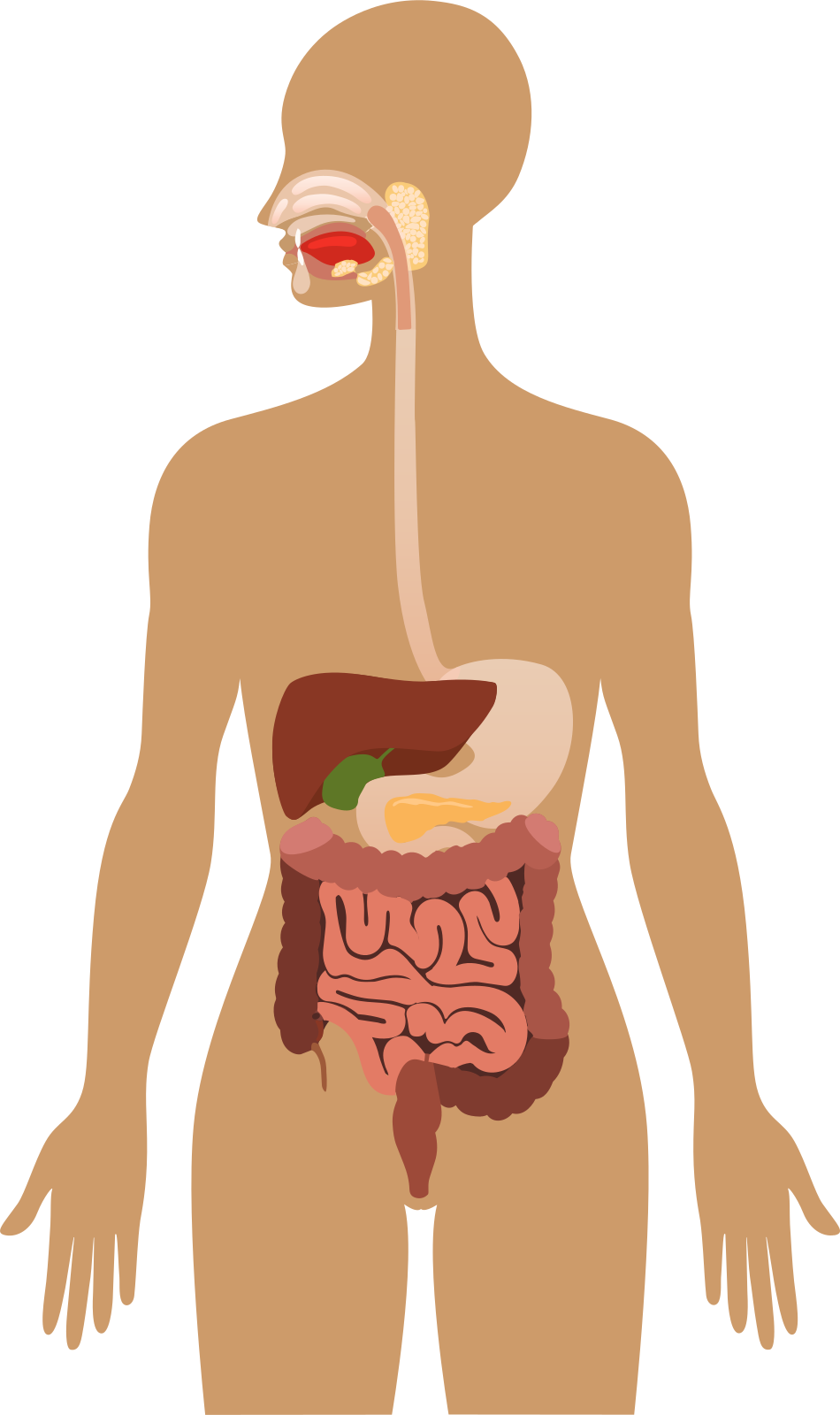
The digestive system converts food into usable nutrients and consists of several key components: the mouth, pharynx, esophagus, stomach, small intestine, and colon. Additionally, accessory organs include the liver, gallbladder, and pancreas. Together, these parts facilitate the mechanical digestion and chemical digestion of food for nutrient absorption. The digestive system performs five main functions: ingestion, propulsion, digestion, absorption, and elimination.


Rasanendriya


Srotāmsi & Dhātu
Srotāmsi Dhātu
Upa-Dhātu
Mūla
Mārga
Mukha
Mala
Prāna
left chamber of heart, maha srotas
respiratory tract, bronchial tree, alveoli
nasa
carbon dioxide
Ambu
kloma, tālu, choroid plexus
GI mucous membrane
vrukka, jihvā, roma kupa
mūtra, sveda
Anna
esophagus, stomach fundus
maha srotas — lips to ileocecal valve
ileocecal valve
purīsha
Rasa
twak, stanya, rajah
right chamber of heart, 10 great vessels
venous system, lymphatic system
arteriole/venous junctions
Poshaka Kapha
Rakta
sira, kandara
yakrut, pliha
circulatory system
arteriole/venous junctions
Poshaka Pitta
Māmsa
twacha, vasa
snāyu, mesoderm, tvacha
entire muscle system including smooth, heart, & involuntary muscles
roma krupa, sites of khamala
khamala
Meda
snayu
omentum, vrukka
subcutaneous fat
roma kupa
sveda
Asthi
danta, taruna asthi
pelvic girdle, sacrum
skeletal system
kesha, nakha
kesha, nakha
Majjā
ashru
brain, spinal cord, bone marrow, sandhi (joints & junctions between Dhātus)
central, sympathetic and parasympathetic nervous systems
synaptic space, neuro-muscular cleft
akshi sneha, vit sneha
Shukra
OJAS
testicles, nipples
vas deferens, epididymis, prostate, urethra, urinogenital tract
urethral opening
none, functionally pubic and axillary hair, & secondary sexual characteristics
Ārtava
OJAS
ovaries, areola of nipples
fallopian tubes, uterus, cervical canal, vaginal passage (yoni)
labia minor/major (yoni oshtha)
none, functionally pubic and axillary hair, & secondary sexual characteristics
Rajah
fundus of the uterus
endometrium uterus
cervix and vaginal passage
Stanya
lactiferous gland
lactiferous ducts
duct openings in nipples
Purīsha
cecum, rectum, sigmoid colon
large intestine
anal orifice
Mūtra
kidneys
ureter, bladder, urethra
urethral opening
Sveda
sebaceous glands, sweat glands
sebaceous ducts, sweat ducts
sweat duct, openings in pores of skin
Mano
heart, cardiac plexus, brain, chakra system
entire body
sensory organs, marma points
excess rajas and tamas qualities
Samprāpti
Sañchaya
Prakopa
Prasara
Sthāna Samshraya
Vyakti
Bheda
VātaPittaKapha
shīta
rūksha/ laghu
chala
sūkshma
vishada
khāra
drava/ amla
ushna/ katu
sara/ snigdha/ tikta
tīkshna
laghu
āmisha gandha
guru/ hima
drava/ manda
snigdha
picchila
mrudu/ āvila
kathina/ sandra/ sthūla/ sthira
Mārga
Abhyantara
Bāhya
Madhyama
Agni
Jāthara Agni
Bhūta Agni
Dhātu Agni
Dhātu
Rasa & Rakta
Māmsa, Meda, Asthi, Majjā, Shukra, Ārtava
Red = Āyurveda · Amber = Physiology · Olive = Anatomy. Tap any colored word to explore it; close to return to your place.